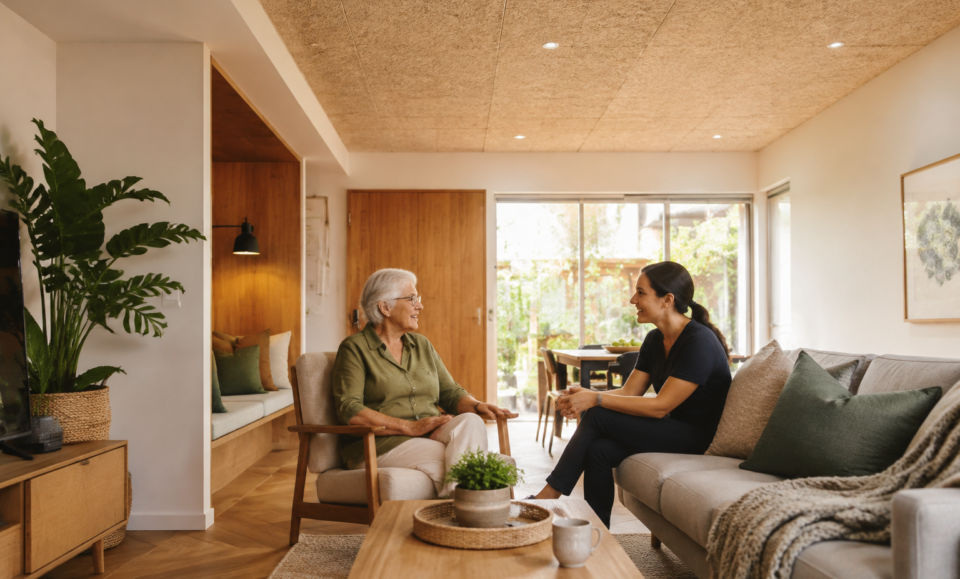
The physical environment can strongly influence comfort, communication and independence when home care services are delivered in a private residence or supported living setting. Thoughtful interior improvements, including wood wool acoustic panels, can reduce disruptive reflected sound in busy shared areas. Where both visual character and sound absorption are important, wood wool panels may provide a practical option for selected ceilings and walls.
Why Acoustics Matter in Care Environments
Sound is often overlooked when homes are adapted to support ageing, disability or changing health needs. Hard floors, large windows, tiled surfaces and open-plan rooms can cause sound to reflect throughout an interior. Conversations, televisions, kitchen appliances and household activity may then become more difficult to distinguish.
Poor acoustic conditions can be particularly challenging for people with hearing loss, sensory sensitivities or cognitive changes. When several sounds overlap, following a conversation or understanding instructions may require greater effort. This can lead to frustration, fatigue or withdrawal from shared activities.
Reducing reverberation does not require eliminating normal household sounds. The objective is to make speech clearer and prevent unnecessary noise from dominating the room.
Creating Spaces That Support Communication
Clear communication is important when a support worker is discussing medication reminders, meal preparation, mobility assistance or the day’s schedule. A quieter setting can make these conversations easier to follow, particularly when the person receiving support uses hearing aids or relies on visual cues.
Room layout can also affect communication. Seating should allow people to face one another without bright windows directly behind them. Televisions and radios can be turned down during important discussions, while soft furnishings may help absorb some reflected sound.
Curtains, rugs and upholstered furniture can improve smaller rooms, although they may not provide enough absorption in large or highly reflective spaces. Purpose-designed ceiling or wall treatments may be appropriate where a more substantial acoustic improvement is required.
Balancing Safety with Interior Comfort
Any modification to a care setting should account for safety, cleaning and accessibility. Rugs may improve acoustics but can create trip hazards if they are loose or positioned across walking routes. Heavy curtains may be unsuitable near heaters, while upholstered surfaces may require more regular cleaning.
Ceiling treatments can preserve clear floor space, which is useful for people using mobility aids. Wall-mounted materials should be placed where they will not interfere with handrails, switches, equipment or frequently used circulation areas.
Lighting, sprinklers, ventilation outlets and other building services must also be considered before installing overhead systems. Professional planning can ensure acoustic materials are positioned effectively without obstructing essential fixtures.
Selecting Suitable Materials
Interior materials used in care environments need to provide more than an attractive finish. Depending on the location, designers and property owners may need to consider fire performance, durability, moisture exposure, maintenance and impact resistance.
A material’s acoustic performance should be assessed in relation to the room rather than viewed in isolation. The size of the space, ceiling height, existing finishes and level of activity will all influence the amount and placement of sound-absorbing treatment required.
Colour and texture also affect how a room feels. Warm, natural-looking finishes can make clinical or institutional spaces appear more welcoming. Neutral shades may blend with the surrounding interior, while carefully chosen colours can help define activity areas or support visual orientation.
Supporting Familiar Daily Routines
A successful care environment should enable ordinary activities rather than make the home feel like a treatment facility. The person may want to continue cooking, watching television, speaking with visitors or participating in hobbies. Interior changes should support these routines while addressing genuine safety and comfort concerns.
For example, a dining and kitchen area may need better sound control if appliances make conversation difficult. A shared living room could benefit from improved acoustics when several people gather there. A quieter bedroom or private sitting area may also provide a useful retreat when the main household becomes busy.
The individual’s preferences should guide these decisions. Some people enjoy active, lively surroundings, while others find persistent background noise uncomfortable. Discussing the options with the resident, family members and relevant professionals can help identify appropriate changes.
Reviewing the Environment Over Time
Care needs and living arrangements can change. A room that once functioned well may become difficult to navigate after a change in mobility, hearing or vision. Regularly reviewing the home environment can reveal issues before they significantly affect daily life.
Support workers and family members may notice practical warning signs, such as repeated requests to speak louder, difficulty understanding conversations in particular rooms or avoidance of noisy shared areas. These observations can help determine whether simple adjustments or more specialised acoustic treatment should be considered.
A well-designed care setting brings together safety, dignity, accessibility and sensory comfort. By paying attention to sound as well as physical movement, households can create interiors that make communication clearer and everyday routines more manageable.