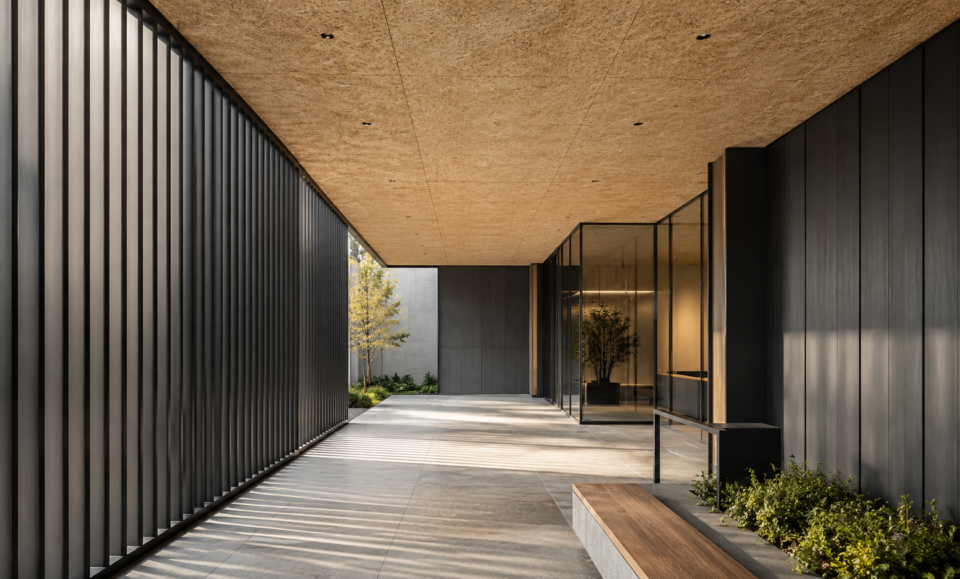
Modern architecture often depends on how surfaces guide light, sound and movement through a space. Designers may use aluminium battens to create clean linear detail across façades, soffits and interiors, especially where a project needs rhythm without visual clutter. In quieter indoor settings, a wood wool ceiling can help introduce texture while supporting a warmer and more comfortable atmosphere.
Texture is one of the most powerful design tools in a building. A plain surface can feel flat even when the room is well planned, while a carefully detailed wall or overhead plane can add depth without needing bold colour or decoration. This matters in commercial, education, hospitality and residential projects where the design needs to feel considered but still practical.
The best architectural finishes usually work on more than one level. They improve the way a space looks, but they can also help with comfort, durability, privacy or acoustic performance. That balance is important because buildings are not designed only for first impressions. They need to perform every day for the people who work, learn, visit or relax inside them.
Linear Detail and Visual Direction
Repeated lines can bring order to a space. On an exterior, they can break up large elevations and make the building feel more refined. Indoors, they can draw the eye along a ceiling, frame an entry or create a stronger sense of movement through a corridor.
This type of detailing works well in projects that need a modern look without feeling too stark. Slim profiles can create shadow and contrast, while wider spacing can make a feature feel lighter. The result depends on proportion, finish, alignment and how the material interacts with surrounding surfaces.
Linear systems can also support practical design goals. They may screen services, provide partial privacy, soften bulky structures or help transition between indoor and outdoor zones. In public-facing buildings, they can make entries and shared areas feel more polished without relying on heavy decorative elements.
Natural Texture in Interior Environments
While linear detail can sharpen the structure of a space, natural overhead texture can soften it. Many interiors now combine hard floors, glass, exposed services and open layouts. These elements can look clean, but they may also make rooms feel noisy or cold if the ceiling and wall finishes are not carefully chosen.
A textured overhead surface can help create warmth and visual interest. It can make a meeting room feel less clinical, support a calmer learning environment or help hospitality spaces feel more welcoming. This is especially useful where designers want the ceiling to contribute to the character of the room rather than disappear into the background.
Natural-looking materials also work well with timber furniture, neutral palettes, indoor plants and warm lighting. They can help bridge the gap between technical performance and human comfort, which is increasingly important in spaces designed for long periods of use.
Matching Materials to Purpose
Material selection should always begin with the purpose of the space. A high-traffic commercial lobby needs a different design response from a classroom, office breakout area or boutique retail environment. The right finish depends on how the area is used, how much maintenance it will require and what kind of atmosphere the project needs to create.
External features need to handle exposure, weather and long-term appearance. Internal systems may need to support lighting, air conditioning, acoustic control and access to services. When these details are considered early, the finished result feels more resolved and is easier to maintain.
Designing for Longevity
Architectural materials should not only suit current trends. They should also support long-term use and maintain a strong appearance after installation. Neutral finishes, clean profiles and natural textures can help a building remain relevant even as interior styling changes around them.
Good design often comes from restraint. Instead of filling a space with too many competing elements, one or two strong material choices can create a clear identity. Linear forms can bring structure, while textured ceilings can add comfort and depth. Together, these finishes help shape spaces that feel purposeful, durable and easier to experience every day.
Thoughtful material choices help modern spaces feel more structured, comfortable and visually balanced across interiors, façades and shared environments.