
Buying a home has always been a mix of excitement and anxiety, and for many buyers, the real complexity begins when conveyancing services enter the picture. A modern home conveyancer is no longer working behind stacks of paper alone; they are now supported by intelligent systems that quietly reshape how property changes hands. Artificial intelligence has stepped into the background of the home-buying experience, making processes smoother without stealing the spotlight from the human moments that matter most.
Not long ago, purchasing a home meant weeks of uncertainty, unanswered emails, and paperwork that felt endless. Buyers would wait, hoping nothing went wrong, refreshing inboxes late at night. Today, AI is rewriting that story, not by replacing people, but by supporting them in ways that feel almost invisible.
Picture a young couple searching for their first home. They fall in love with a small house near good schools, but fear creeps in once the offer is accepted. What if something is missed, what if delays cost them the deal? Behind the scenes, AI tools are already scanning documents, flagging inconsistencies, and organising timelines before the couple even realises there was a risk. The result feels simple, but the technology working quietly is anything but.
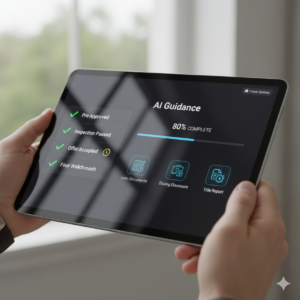
One of the most noticeable changes that AI brings is speed. Property transactions, once slowed by manual checks, now move forward with fewer pauses. Smart systems review contracts, search property records, and detect potential issues faster than traditional methods ever allowed. This does not remove human judgment; it sharpens it. Professionals can focus on meaningful decisions instead of repetitive tasks, and buyers experience fewer moments of uncertainty.
Transparency has also taken a leap forward. Buyers often describe the process as confusing, filled with unfamiliar terms and unclear progress updates. AI-driven platforms now present updates in plain language, showing what has been completed and what comes next. When people understand what is happening, stress levels drop. Confidence grows when buyers feel informed rather than left guessing.
The emotional side of buying a home is where AI’s impact becomes most interesting. Purchasing property is rarely just a financial move. It is about family, stability, and future plans. AI helps reduce the emotional burden by removing friction. Automated reminders prevent missed deadlines. Predictive systems highlight potential delays early, giving buyers time to adjust expectations rather than face last-minute surprises.
Stories from recent buyers reflect this shift. A remote worker relocating to a new city might never meet their legal team in person, yet still feel supported throughout the process. AI-enabled communication tools ensure messages are answered quickly, documents are accessible anytime, and progress is visible without constant chasing. The experience feels personal even when conducted entirely online.
AI is also changing how risks are managed. Property transactions carry hidden complexities that first-time buyers rarely anticipate. Intelligent systems can analyse past data to identify patterns, spotting issues related to zoning, boundaries, or historical disputes. When potential problems appear early, solutions become easier and less costly. Buyers are protected not through fear, but through foresight.
Another quiet revolution is accessibility. AI-powered tools are making home buying easier to navigate for people who previously felt excluded by complexity. Clearer explanations, digital document handling, and guided processes open the door for younger buyers, international investors, and busy professionals alike. The process adapts to people’s lives instead of demanding they adapt to it.
Despite the technology, the human element remains central. AI does not replace trust; it supports it. Buyers still rely on experienced professionals to guide them, reassure them, and advocate on their behalf. What changes is the quality of interaction. Less time spent on admin means more time for meaningful conversations and thoughtful advice.
The rise of AI also aligns with changing expectations in 2026. Consumers now expect the same level of efficiency from property transactions that they experience with banking, travel, and shopping. Waiting weeks for updates feels outdated. AI helps the property world meet modern expectations without sacrificing care or accuracy.
Environmental awareness is another subtle influence. Digital processes reduce paper use and unnecessary travel, aligning home buying with more sustainable habits. Buyers may not choose a service solely for this reason, but it resonates with values increasingly shaping decisions today.
AI’s role in home buying is not about flashy promises. It is about reliability. When systems quietly ensure deadlines are met, documents are accurate, and communication flows smoothly, buyers feel supported rather than overwhelmed. The technology fades into a background, allowing the excitement of moving into a new home to take centre stage.
Looking ahead, the home-buying journey continues to evolve. AI will become even more intuitive, learning from each transaction to improve the next. Buyers may not always notice the technology at work, but they will feel the difference in how smooth and predictable the process becomes.
For anyone stepping into the property market, this shift brings reassurance. The process is no longer defined by uncertainty and waiting. It is shaped by clarity, speed, and thoughtful support. AI is not changing the dream of owning a home; it is simply removing the obstacles that once made that dream harder to reach.
As stories of smoother transactions spread, expectations rise. Home buyers begin to see efficiency not as a luxury, but as a standard. AI stands quietly at the centre of this transformation, redefining how people experience one of life’s biggest milestones, without ever taking away its human heart.